Text and photo: Joëlle van Wissen
bron: https://www.maastrichtuniversity.nl/news/why-snack-bar-can-be-healthy-too
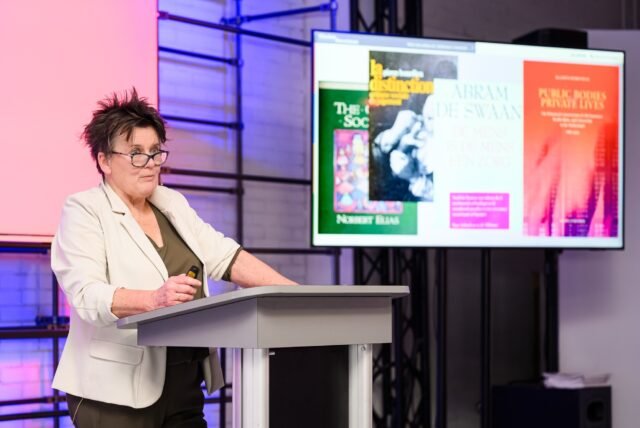
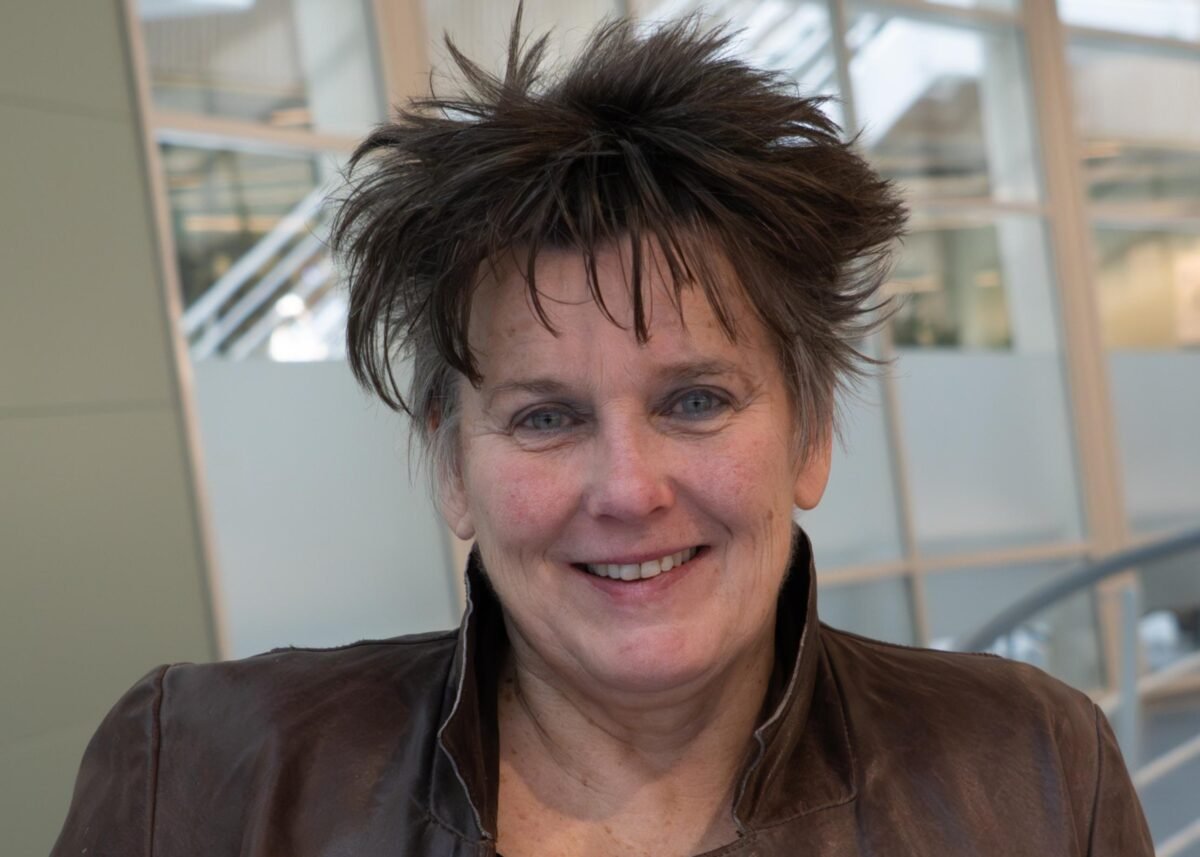
How can we make society healthy beyond the hospital? Throughout her career, Professor of Philosophy of Public Health Klasien Horstman (CAPHRI) has been exploring this question. She started as a PhD candidate at the Faculty of Health, Medicine and Life Sciences (FHML) and ultimately remained here until her (upcoming) retirement. Klasien will deliver her farewell lecture On Friday 27 February. We reflect on her long career at FHML and look ahead to her retirement.
After studying historical and philosophical sociology, Klasien became a social studies and economics teacher at a secondary school. “I really enjoyed it, but I wanted to go into research,” she says. “In the late 1980s, many universities had hiring freezes, except Maastricht University (UM). It had just been founded and was actually growing. I was hired as a PhD candidate in philosophy and ethics related to health and have stayed at UM ever since. Along the way, I have been a part-time Socrates professor at Eindhoven University of Technology for nine years. It was a special chair in philosophy and ethics of bioengineering. I was still working at UM at the time, but it was interesting to see how things worked at another university.”
No voice
What exactly does philosophy of public health entail? “The core question is: how do we make society healthy? This concerns health in the public domain, not in the consulting room or the hospital. Think of sewer systems, vaccinations, prevention, but also clean air, healthy schools, workplaces, cities and villages: in short, a healthy ecology. In doing so, we especially pay attention to people or groups who often do not have a voice or say in this field, such as people with few formal diplomas or women. In the 1980s, for example, there was a lot of knowledge about the average body, but that body was almost always male. Professionals knew way less about women’s bodies and women’s complaints were stigmatised.”
“I advocated collaboration between our research group, microbiology and infectious disease control. Some people thought this was a strange combination.”
Memorable career moments
“I really enjoyed working here,” Klasien says. “I have always had wonderful PhD candidates, interesting and intelligent people. It is a great privilege to be able to train or supervise people towards a PhD or postdoc, and then see them apply what they have learned in other places. Another memorable moment in my career was an Erasmus project on educational development. We worked with partners from Ukraine and Russia, so there was quite a bit of tension surrounding the project. I think it’s remarkable how the project went and that we successfully completed it. Despite the context, we still managed to develop some great educational programmes together.”
“During the reorganisation of CAPHRI in 2014, I advocated collaboration between our research group, microbiology and infectious disease control. Some people thought this was a strange combination, but we learned a lot from this collaboration. For example, we are now conducting joint research into the prevention of infectious diseases and antibiotic resistance in a residential setting for people with mild cognitive impairments, where outbreaks of gastrointestinal or other infections occur regularly. Because you cannot turn someone’s home environment into a laboratory, we work together with the residents to explore alternative ways of conducting this research. We do this with an artist who creates comics and drawings based on residents’ stories. It’s very experimental, but it is possible precisely because we have people from different disciplines at the table. This also teaches us what transdisciplinary working entails.”
Good knowledge
In terms of scientific contributions, Klasien believes that her research into standards for good knowledge is important for health sciences. “You always hear that we need to work evidence-based but too little attention is paid to the norms we use to determine what constitutes good knowledge. What counts as evidence? I think that’s important, because we need to think carefully about the quality of knowledge. Experts possess valuable knowledge, but there is also professional knowledge gained through practice, or knowledge held by citizens who are very knowledgeable about a particular issue. However, we must keep examining how knowledge is produced and how strong certain claims are. Not all citizen’s intuition is knowledge, but experts can also exaggerate and overstate findings of small studies under the guise of ‘evidence-based’. This undermines trust in scientific practices.”
“Meeting each other is important for health.”
Ivory tower
“Over the course of my career, there have been important developments in my field. Much more attention is being paid to the relationship between science and society, along with a greater awareness that science does not exist in an ivory tower.In thinking about health, there has also been a shift away from an individualistic perspective and back towards the social aspect of health. This is visible across society as a whole, including internationally. There is greater recognition of a broader concept of health: health is not just the absence of disease, but also includes wellbeing. I am pleased about this, because our research group with sociologists and anthropologists has always strongly advocated this.”
Microcosm
After her retirement, Klasien still has plenty to do. “For the past ten years, we have organised ‘University with the Neighbourhood’, in which we work together with residents of low-income neighbourhoods. For example, we improved a park and set up a community meeting place. We have also been organising a philosophy café for over eight years, and I will continue to do so. Furthermore, I am still supervising a few PhD candidates, and in March I will become chair of a children’s and care farm. That is particularly interesting, because it is a kind of microcosm in which very different people, animals, nature and micro-organisms all come together. Basically, it’s the world in one place. It then lets you think about how to care for all these actors in a sustainable way.”
Sewage system, snack bar and care farm
The title of her farewell lecture is ‘The sewage system, the snack bar and the care farm: the politics of a healthy society’. “These three concepts express our interdependence. Sewer pipes connect us, both literally and figuratively. A snack bar can be seen as an unhealthy place, but I actually see it as a healthy one, because it’s a place where people meet. That is one of the most important factors for health, especially in neighbourhoods where there are few places for people to encounter one another. The care farm represents that microcosm, where you also see that we are not only dependent on other people. Humans, animals, nature and micro-organisms together form the planet and depend on one another. We need to take good care of each other.”